 Monthly scientific seminars on Agroecology
Home>Expertise of the scientific community related to Agronomy - crops and cropping systems : research examples
Agronomy Research Expertise in Montpellier and Languedoc-Roussillon (South of France)

Agronomy : crops and cropping systems
Agronomy research examples
Mango fruit production and quality
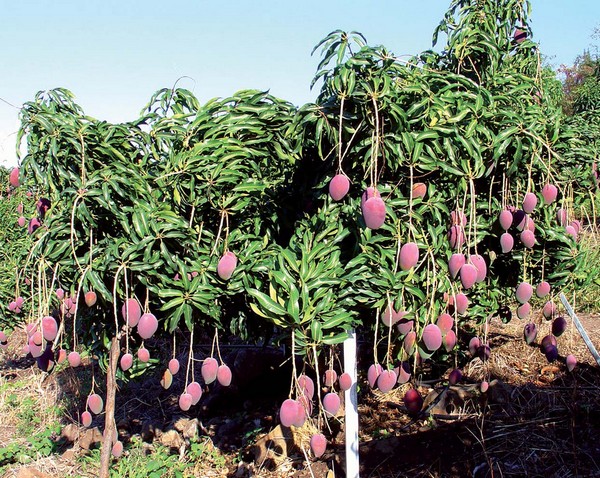
Mango ranks fifth in terms of worldwide fruit production.Like other tropical fruit species, mango cropping is hampered by problems affecting yield and quality: alternation of flowering and production between years, variable fruit quality and ripeness, pest and disease control. The lack of knowledge on mango is a barrier to effective mango crop management. The (...)
Diagnostic methods to improve tropical tree crop productivity
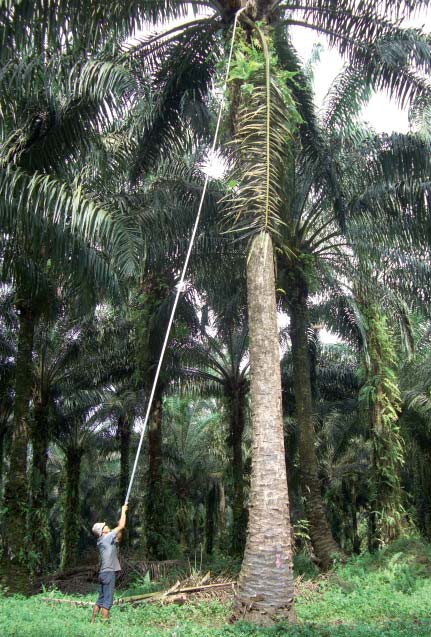
In humid tropical areas, the expansion of oil palm, natural rubber, coffee and cocoa cropping to meet growing world demand raises environmental issues. It is thus essential to enhance the productivity of established plantations by targeting higher sustainable crop yields using environment-friendly cropping practices. Researchers of the UPR Performance (...)
Modelling the functioning of a tropical agrosystem:an application to banana plantations

Modification of overall agrosystem functioning is required for cropping system (CS) innovation. A system approach to relationships between plants, pests and the environment is needed to understand and describe the functioning of these new systems, which are more complex than systems in which inputs are massively used. This system-based representation of agrosystem (...)
Virtual Fruit–a model to gain insight into fruit quality

Fruit quality is the result of many highly interacting physiological processes that are controlled by many genes whose intensity varies with the environment and cropping practices. The genetic, environmental and cropping factors controlling the intensity of the processes and their interactions have to be understood before being able to manage this quality, which (...)
Ecological intensification of cocoa- or coffee-based agroforestry systems
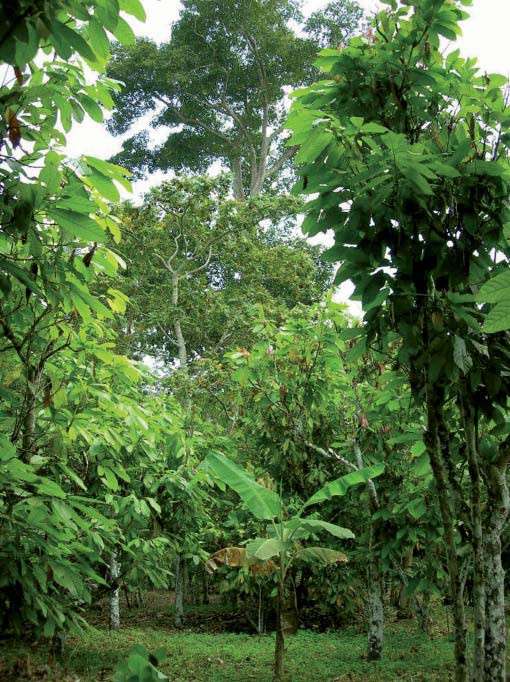
Agroforestry stands in which cocoa and coffee trees are grown alongside many different woody, forest or fruit species are complex systems with high environmental and socioeconomic value. These sustainable systems require few chemical inputs and, in addition to coffee and cocoa, they provide farmers with a range of self-consumed or marketed fruits, timber and (...)
The root system: in situ knowledge enables optimization of crop functioning

Root systems have many functions, e.g. supplying plants with water and nutrients, maintaining the soil structure and its organic status, and reducing erosion risks. The rhizosphere is also a unique ecological niche with intense soil biological activity. These features are especially important under tropical poor fragile soil conditions. The conventional measuring (...)
Development of tools for analyzing grapevine canopy functioning

The crop canopy is a site of mass and energy exchanges between the plant and atmosphere. There is high microclimatic heterogeneity in this complex environment. Many studies have shown that the grapevine canopy structure affects the yield via its effects on light interception, photosynthesis and transpiration. It also affects grape ripening and the harvested grape (...)
DMC-an ecological intensification engineering tool

For ecological intensification, research must provide relevant solutions to two major issues, i.e. need to produce more even though farmland is decreasing, and to produce better in order to preserve the environment. The intensification of natural processes by direct seeding mulch-based cropping systems (DMC) can restore the chemical, physical and biological fertility (...)
Much higher production with agroforestry systems in temperate regions

A 100 ha agroforestry plot can yield as much as a standard 140 ha crop field. In agroforestry systems, trees and crops are grown together in agricultural plots. Current experiments, supplemented by computer simulations, have confirmed the high productivity potential of temperate agroforestry systems. Mixed poplar–cereal crop plots produce 40% more than plots (...)
Changing relationships between sugarcane growers and industrial stakeholders to improve sugarcane quality

Agroindustrial subsectors represent a significant income source for farmers in both developed and developing countries. Farmers and agroindustrial processing units interact in supply areas to manage physical flows of agricultural raw materials, information flows and incentive instruments implemented to regulate and pay for deliveries in quantitative and qualitative (...)
Plant architecture and in-plant water supply and transfer

Water supply has a marked impact on plant functioning in terms of resource acquisition (water/mineral uptake and photosynthesis), assimilate allocation to different organs and therefore control of organ growth.
A plant water uptake and transfer model was developed. This model is based on plant architecture descriptions combined with characterization of (...)
Comprehensive environmental assessment of agricultural and food products–a case study of fruit and vegetables

Environmental impacts of human societies are mainly associated with the food function. Understanding and, if possible, quantifying relationships between modes of production and food consumption and their environmental impacts (climate change, ecotoxicity, eutrophication, water use, etc.) are essential for making the necessary changes. Streamlined comprehensive (...)
Rhizosphere–a suitable scale for assessing the phytoavailability of trace elements?

Plants are key constituents of agroecosystems,so it is essential to study soil-plant transfers (phytoavailability) of trace elements (TE) in contaminated agricultural soils. Some TE such as arsenic (As) can accumulate in plants, with a high subsequent risk of contaminating the food chain. Other TE like copper (Cu) are mainly phytotoxic and affect crop yields. (...)
Environmental impact indicators in oil palm plantations

It is essential to understand and measure the environmental impacts of agricultural production in order to optimize cropping systems and thus ensure sustainable production. This is becoming a crucial issue with respect to oil palm cropping. The growing global demand for oil palm is rapidly increasing pressure on natural resources. Since 2004, CIRAD has been developing (...)
Direct seeding mulch-based cropping systems (DMC) and carbon sequestration

Soils contain more carbon than terrestrial vegetation and the atmosphere combined. They hence represent a critical carbon sink that is closely dependent on land-use patterns. Agricultural practices contribute to the depletion of organic carbon resources. At the plot level, the decline in carbon stocks is attributed to three processes: 1) oxidation due to the (...)
Integrated modelling of cropping practices and biomass flows in agricultural production systems

The ‘Mafate’ approach was developed for modelling and analysing mass flows on farm and territory scales, and designed to represent farmers’ practices and test management strategies. It involves four steps: (i) acquisition of knowledge on practices, (ii) their conceptual representation (action models, typologies), (iii) construction of simulation models, (iv) (...)
Sharing major nutrient resources and uptake facilitation in intercropped cereal-legume systems: a case study on phosphorus

In light of the importance of ecological intensification in agrosystems, the phosphorus issue is especially worrisome because of the finite nature of natural phosphate resources, which is the main source of phosphate fertilizers. The shortage of these fertilizers will be a major problem within a few decades, so solutions are urgently needed. Among the promising (...)
Nitrous oxide emission dependent on soil cover management in agroecosystems in Madagascar

In Madagascar, direct seeding mulch-based cropping systems (DMC) have been developed as an alterative to conventional systems based on soil tillage, which are unable to effectively meet the major challenges of land conservation, environmental preservation and food security. DMC systems combine no tillage and organic matter management (crop residue left on the (...)
Organized diversity and pest and disease dynamics

Communities of biological organisms living in cultivated terrestrial ecosystems have an impact on their productivity and sustainability, either directly, e.g. pests and diseases, or indirectly, e.g. ‘soil engineers’ or litter processors. The working hypothesis is that the reintroduction and promotion of biodiversity in relatively nondiversified agrosystems can (...)
Effects of shade trees on pests and diseases of Arabica coffee

Arabica coffee (Coffea arabica) may be monocropped, generally in intensive cropping systems. It is often grown under shade in agroforestry systems ranging from simple associations of two woody species to complex systems resembling natural ecosystems. The susceptibility of modern cropping systems, especially to pests and diseases, has partly been attributed (...)
Population dynamics and natural control of pests and diseases in an orchard landscape

A very high number of orchard-wide pesticide treatments are required to control pests and diseases in apple and pear orchards. In southeastern France, the codling moth (Cydia pomonella) is the main focus of these treatments. However, the biological characteristics of this pest species (dispersal capacity, high preference for pome fruit) suggest that (...)
OMEGA 3 project–ecological mechanisms of pest and disease management optimized to sustainably improve agrosystem productivity

High specific plant diversity (DVS) is typical of natural ecosystems, which are affected to a much lesser extent by biological attacks than cultivated ecosystems. Such attacks are generally (but not always) controlled when DVS is introduced in these latter ecosystems. CIRAD, in collaboration with its partners in tropical regions, is analysing the impacts on pathogens (...)
Contribution to cocoa mirid control in Africa

Cocoa cropping is one of the main income sources of rural families in the forest region of Cameroon. However, this crop is hampered by pests such as mirids. Sahlbergella singularis and Distantiella theobroma are the most damaging cocoa crop pests in Africa. In some countries, they are responsible for cocoa production losses of 30-40%.
Pest (...)
Monitoring pest insect movements to enhance sustainable agrosystem management in sub-Saharan Africa

Understanding the spatial dynamics of pests in agrosystems, which consist of a shifting patchwork of cultivated and noncultivated habitats, facilitates prediction of outbreak risks and planning of targeted control of upsurge hotspots. This knowledge also enables ex-ante development of cropping systems in which pests are effectively managed on different (...)
Drought tolerance of maize crops: selecting genotypes for different agroclimatic conditions

Improving drought tolerance in crops is hampered by the contradictory aims of maintaining production in drought conditions and reducing the yield loss risk. Depending on the climatic scenario, maintaining leaf growth under water shortage conditions may be an advantage (photosynthesis remains high) or a drawback (risk of plant death by faster soil water depletion). (...)
Impact of global changes on water and agricultural productivity in the Mediterranean region

Agriculture has a vital socioeconomic development role in northern and southern Mediterranean regions. This sector is known to be particularly sensitive to current and future global changes. LISAH is contributing to the development of decision support tools and adaptation strategies for the benefit of agrosystems affected by these changes. Three major initiatives (...)
Beninese farmers’ perceptions of climate change and their adaptation strategies

This research is focused on the adaptation of family agriculture to climate change. Based on the assumption that changes can best be described by those exposed to them, a survey of farmers was carried to determine their perceptions of the phenomenon and consequences on the environment and their daily lives. Technical adaptations adopted to deal with changes were (...)
Persistent soil pollution and health safety of horticultural pesticides–a case study of chlordecone in the West Indies

Chlordecone is an organochlorine pesticide that was used from 1971 to 1993 in the West Indies. This molecule is stable and continues to persist in the environment, resulting in chronic contamination of the environment and certain crops. Little is known about the dispersion mechanisms of this pesticide, which is highly adsorbed on soils with elevated organic matter (...)
Impact of coffee-based agroforestry systems on water quality and in reducing erosion phenomena

Cropping systems have been widely assessed for their production capacity and impacts on natural resources. Agroforestry systems (AFS), in which several plant species are intercropped in a plot, including trees, can successfully meet these two challenges. Generally AFS, especially those based on tree crops like coffee, are very widespread in Central America. Many (...)
Hydrological functioning on plot and catchment scales in tropical environments–a case study of banana

Ignorance of the main mechanisms controlling the fate of pesticides used in tropical environments is partly responsible for environmental problems in the West Indies and most banana-growing areas worldwide. As part of a study to assess the fate of pesticides in volcanic tropical environmental conditions, environmental degradation which could be potentially induced (...)
Assessing the hydrological impacts of cropping practices in Mediterranean environments

In catchments in which cropland accounts for a major share of the area, cropping practices are an important factor with respect to increasing risks of soil erosion and diffuse pesticide pollution of water. These risks are assessed on two complementary scales, i.e. cropping practice implementation (crop plot) and integration of their effects (catchment).
On (...)
DMC adoption in developing countries

DMC techniques have mainly been adopted over the last three decades in South and North America and Australia, where they have emerged independently from national research and extension systems. These technical changes are harder to implement in developing countries because of the nature of most of their agricultural enterprises: small farms, subsistence strategies, (...)
Organic viticulture–integrated analysis of the conversion to organic agriculture

Organic agriculture (OA) is an ideal framework for setting up more sustainable cropping systems, especially for viticultural systems in which pesticide treatments are substantially used. OA conversions are occurring at a fast pace in viticulture, especially in Mediterranean vineyards (+ 20% between 2006 and 2008 according to Agence Bio) even though the knowledge (...)
Sustainable production and innovation for smallholders in developing countries

The improvement and stabilization of smallholders’ agricultural production are key challenges for international agronomic research. Soils in tropical environments are varied but fragile and the climatic conditions are harsh, with a high probability of catastrophic events occurring. Socioeconomic conditions for smallholders in such regions are also often difficult (...)
Anti-insect netting tailored for protecting vegetable crops in the tropics

In tropical regions, vegetable crops are infested year-round by a broad range of pests. Farmers generally deal with this problem by spraying pesticides. Although farmers, through such unplanned and uncontrolled chemical treatments, may sometimes be able to turn a profit, the residues remaining on the vegetables are a threat to consumer health, and there is a (...)
Innovation and supporting mixed cropping-livestock farms (Burkina Faso)

In sub-Saharan savanna areas, the extension of technical innovations in different production sectors has shown its limits. It cannot, for instance, provide a solution to complex issues such as soil fertility management, crop-livestock integration, or changes in cropping patterns on farms.
In cotton-growing areas in Burkina Faso, CIRAD has developed (...)
Impact of apple orchard cropping systems on wild birds
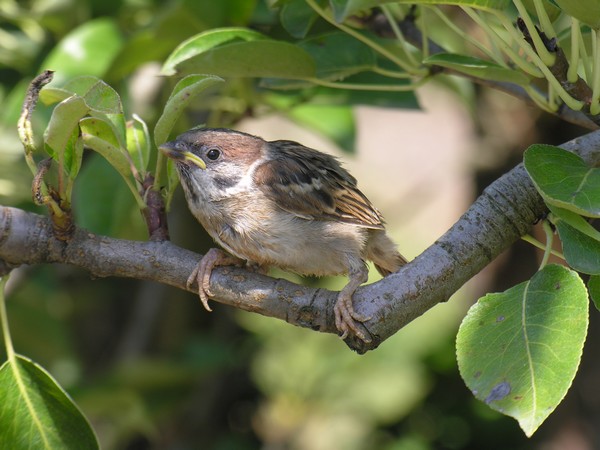
Conventional crop protection strategies that rely on chemical pesticides to control pests in apple orchards have prompted the development of pesticide resistance in codling moths (apple worms), leading to an increase in the frequency of non environment-friendly pesticide treatments. Crop protection strategies differ markedly due to the adoption of alternative (...)
This example was not published on the print file in July 2010.Managing nitrate pollution hazards in western Réunion
The population of the island of Réunion should increase by around 30% by 2030. Treatment of agroindustrial (effluents, composts, stillage, etc.) and urban (STEP sludge, waste water, mixed compost) organic waste will accelerate to overcome the structural delays. Moreover, in this island region, expansion of the urban fabric substantially hampers the development (...)
This example was not published on the print file in July 2010.Environmental impact of composting

Composting is an interesting technique for better spatiotemporal management of organic matter derived from livestock farming: reduction in mass and volume, enhanced soil fertility, and gradual plant nutrition. However, gas release accounts for some loss during organic matter transformation, sometimes representing as much as 50% of the composted organic matter. (...)
This example was not published on the print file in July 2010.Nitrogen cycle and the role of shade legumes in coffee cropping systems in Costa Rica
In Central America, agroforestry systems provide an alternative to intensive high-input coffee monoculture systems which have trouble reconciling production, environment-friendliness and cost-effectiveness. Agroforestry systems have a carbon storage potential, while also reducing nitrate leaching and emissions of nitrous oxide, a major greenhouse gas. However, (...)
This example was not published on the print file in July 2010.DMC for agricultural management of pest and disease resistance
High nitrogen fertilization in conventional cropping systems fosters plant parasite pressure. The processes involved can be clarified by gaining insight into the mechanisms responsible for reducing plant disease resistance. This is helpful for designing and managing highly environment-friendly cropping systems conducive to ecological intensification. CIRAD, INRA (...)
This example was not published on the print file in July 2010.Identifying and gaining insight into farmers’ strategies and practices to assess the impacts of vine growers’ adoption of alternative types of agriculture on a catchment scale (France)

Many INRA research programmes and expert studies are underway with the aim of finding ways to sustainably and markedly reduce pesticide use and impacts in agriculture. Viticulture is not an exception since, in France, this sector consumes 20% of all pesticides applied on only 3.7% of the utilized agricultural area (UAA). In areas where vine monoculture prevails, (...)
This example was not published on the print file in July 2010.Use of sanitizing plants in horticultural systems in the West Indies

In West Indian island conditions, the environmental impacts of agriculture are harshly felt: high quantities of chemical herbicides are used in tree cropping systems, while pesticides are widely sprayed in vegetable crop fields. Chemical inputs lead to soil erosion, surface water pollution and imbalances in microbial populations, including communities of beneficial
(...) This example was not published on the print file in July 2010.DMCs and geographical extension of conventional cropland areas into dry humid tropical regions

The geographical range within which crops are conventionally grown should be extended into soil-climate areas under harsher conditions so as to be able to produce more and better while meeting the new market demand. Three complementary ecosystem functions that occur under DMC are essential. First, enhanced water resource management, by reducing runoff and evaporation. (...)
This example was not published on the print file in July 2010.Introduction of sanitizing plants in citrus orchards in the West Indies—an example of a participatory innovative cropping system design initiative
: cropping system, participatory method, fruit production, citrus, orchard, cover plants, beneficial organism-plant interaction, crop association, West Indies, tropical plantation

A participatory method for designing and assessing innovative cropping systems is currently being tested by the CIRAD HortSys research unit with the aim of reducing herbicide treatments in citrus cropping systems in the West Indies. The constraints of the current system were assessed and potential improvements determined with stakeholders. In response, different (...)
This example was not published on the print file in July 2010.Participatory validation of innovative cropping systems—the Sustainable Banana Plan for Guadeloupe and Martinique
Highlighting the problem and issues
Cropping systems (CS) should be able to quickly integrate innovations that differ markedly from current practices with the aim of reducing input use and negative environmental impacts and addressing societal and regulatory changes. Developing new cropping systems is an innovation process in which the Banana, (...)
Modelling plant-pest interactions and assessing technical integrated production scenarios

Problems associated with integrated production are especially marked in horticulture. This is an ideal field for designing innovative agricultural systems, which is a major methodological challenge facing agriculture today. The underlying scientific challenge is to clarify functional interactions between horticultural plants and pests under the influence of cropping (...)
This example was not published on the print file in July 2010.Participative research to support the development of smallholder natural rubber plantations

Tree crops, and especially smallholder plantations, which account for over 80% of the natural rubber growing area, have a key role for development and sustainable reduction of poverty, which is especially high in rural areas. Research and extension are essential for improving soil productivity and labour conditions on family farms. After an assessment phase, (...)
This example was not published on the print file in July 2010.Adaptive management strategies for soil maintenance in viticulture

Grass cover—sown or natural—in vineyards maintains the soil while also providing different services concerning viticultural production and its environmental impact. However, three problems hamper its adoption in Mediterranean regions: having two coexisting plant covers under limited water and nitrogen resource conditions, determining a management method that (...)
This example was not published on the print file in July 2010.Update on 22/01/15
Extrait du site http://www.agropolis.fr/agronomy/examples-list.php